Story Preview
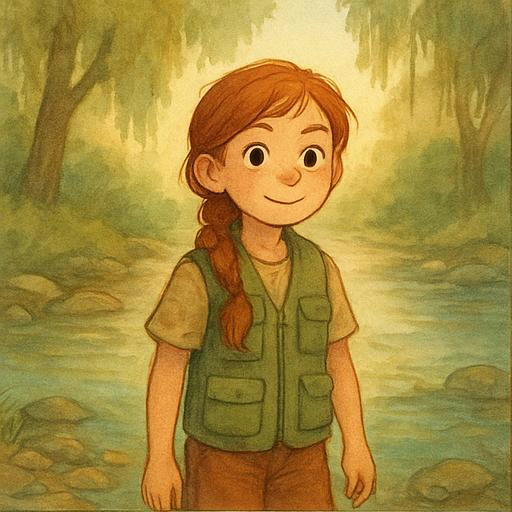
Lula knew the river like she knew her own reflection. She had fished these shallows since she was six years old, wading into the copper-colored water at dawn when mist rose like breath and the fish nibbled at her floating line with delicate kisses. Her vest—faded green, pockets bulging with hooks and sinkers—was a second skin. She had never fallen in. Not once. Until Tuesday.
The stone was slick. Her boot found no grip. She went down hard, arms windmilling, and the river swallowed her whole. Cold shock. Tumbling. A flash of her own startled face reflecting off water-light. Her hands found bottom—smooth pebbles, silt—and she pushed up, gasping. Water streamed from her vest. Her heart hammered like a frightened bird. She staggered to the bank, soaked and furious with herself.
As she wrung out her braid, something pale caught her eye. Wedged between two rocks downstream was a book. Not a real book—too warped, too water-logged. But a notebook, leather gone soft and swollen, pages swelled like bread dough. Lula's anger dissolved into curiosity. She fished it out with a stick and sat in the grass. The cover bore no name, only a faded gold leaf. She opened it carefully.
The pages were ink-smeared chaos at first—words bled into purple blurs, letters dancing at drunken angles. But as her eyes adjusted, a pattern emerged. Not words. Drawings. Dozens of them, small and precise: sketches of the riverbank from different angles. The willow tree from downstream. The limestone cliff face. The wide shallow pool where the herons fished at dusk. Each drawing dated in neat handwriting. Each one obsessively detailed. And each sketch showed the same stretch of river Lula knew by heart.
Lula traced a finger over a drawing dated just three days ago. The perspective was uncanny—as if someone had stood exactly where she stood now and drawn everything she saw. A shiver ran through her. Who sketches the same patch of ground over and over? She turned more pages, watching the drawings evolve. Some were rough, some refined. But they all showed her river. Her place. All documented by a stranger.
A shadow moved across the water. Lula looked up fast. Nothing. Just wind through the willows. But her skin prickled. She suddenly felt less like a discoverer and more like someone being discovered. Was someone watching her now, the way the notebook suggested they'd been watching this place? She glanced at the cliff upstream, the dense tree line, the rocks. The river seemed smaller all at once. Lonelier. She clutched the notebook and stood, still dripping wet.
That night, she spread the notebook's pages on her bed, trying to dry them with a hair dryer set to low. The drawings multiplied in her mind—a ghost artist, sketching obsessively. A person obsessed. A person dangerous, perhaps? Or lonely? She convinced herself that whoever owned this was probably gone by now, moved on to another river, another project. The notebook was abandoned, forgotten. It was hers now. But doubt gnawed at her like a fish at bait.
The next morning, she returned to the river—fishing pole in hand, notebook tucked under her arm. She told herself she was looking for fish. The truth was simpler and scarier: she was looking for proof. A footprint. A name. Some clue about who loved this stretch of water enough to document it like a sacred text. She waded in, but her focus had shifted. Every shadow felt significant. Every sound, deliberate.
Then she saw it. Tucked into the crook of the old willow—the tree from the drawings—was a small wooden box, painted blue. Not hidden. Placed. As if someone had left it there for a specific person to find. Lula's hand shook as she reached for it. Inside: more sketches, yes, but also something else. A pencil. A letter, addressed in careful handwriting: To whoever finds this. I'm sorry I lost my record.
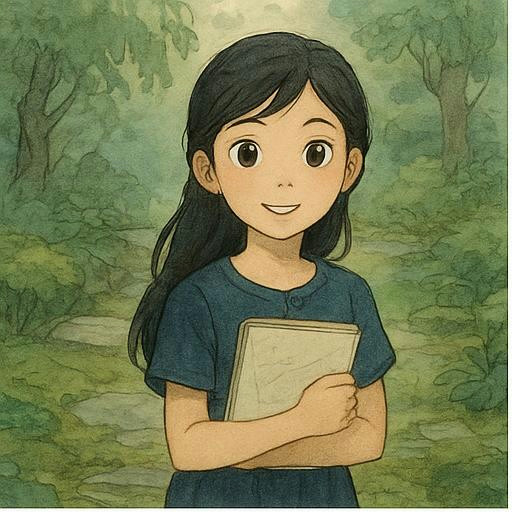
Lula read the letter three times, each word reshaping what she thought she knew. The artist's name was Maya. Fourteen years old. She lived upstream and had been documenting the river for a school project—a full year of sketches, a visual diary of how this one stretch changed with seasons. The project was due tomorrow. The notebook, lost two days ago during a rain storm, was her entire year of work. And her grade depended on it.
Lula felt something click inside her chest—not fear now, but purpose. She wasn't being watched by a stranger. She was being sought by someone desperate. This mystery didn't need solving. It needed solving for someone else. She gathered both the notebook and the blue box, and before her doubt could anchor her to caution, she began walking upstream along the bank, following the river toward places she'd never explored.
The houses appeared gradually, clustered on higher ground away from flood risk. She found the right one by following a simple hunch: a girl standing on the front porch, red-eyed, holding a phone like it might offer salvation. Their eyes met. Recognition flickered—not of faces, but of shared understanding. Lula held up the notebook. Maya took one step down the stairs, then another, then ran.
“You found it,” Maya breathed, though it wasn't quite a question. She took the notebook as if handling something fragile as glass. “I've been searching since the storm. I thought it was gone. I thought I'd have to start over, and I can't—the project is due this morning.” She looked at Lula then, really looked at her. “You're the person from that sketch.” She flipped pages. “Two weeks ago. I drew you fishing. You were so still, so focused.”
Lula hadn't expected to be in the notebook. She felt oddly honored, oddly seen. “I fell in yesterday,” she said, surprising herself with the confession. “I landed on your notebook. I thought someone was spying on my river.” Maya laughed—not mockingly, but with real relief. “Your river? I thought it was mine.” And there it was: the moment when two solitary people, each guarding their own private place, realized they'd been guarding the same piece of the world together all along.
As Maya rushed inside to photograph the wet but intact notebook for her teacher, Lula stood on the unfamiliar porch, looking upstream toward the river she loved. The willow was invisible from here, hidden by a bend and trees, but she could feel its presence. She'd come searching for answers about a mystery, but instead she'd found something stranger: proof that her favorite place had always been waiting for someone else to love it too. Tomorrow, she decided, she'd come back. And maybe this time, she wouldn't fish alone.
Download Momo to read the full story with audio and illustrations
Read the full story in the Momo app